
Florence, 1348. Famine. Plague. Extraordinary Courage.
A powerful historical novel about compassion, love, and thehuman spirit’s ability to endure immense adversity.
For fans of Year of Wonders, Ken Follett’s Kingsbridge series, and all readers of historical fiction.
The Blackest Time has earned the Maincrest Media Award, the Independent Press Award, and the Book Excellence Gold Award



A story of compassion, love, and the triumph of the human spirit in the time of the Black Plague told through the experiences of Gino Liani, a young man who moves from his family’s farm to find work in Florence
Florence 1348
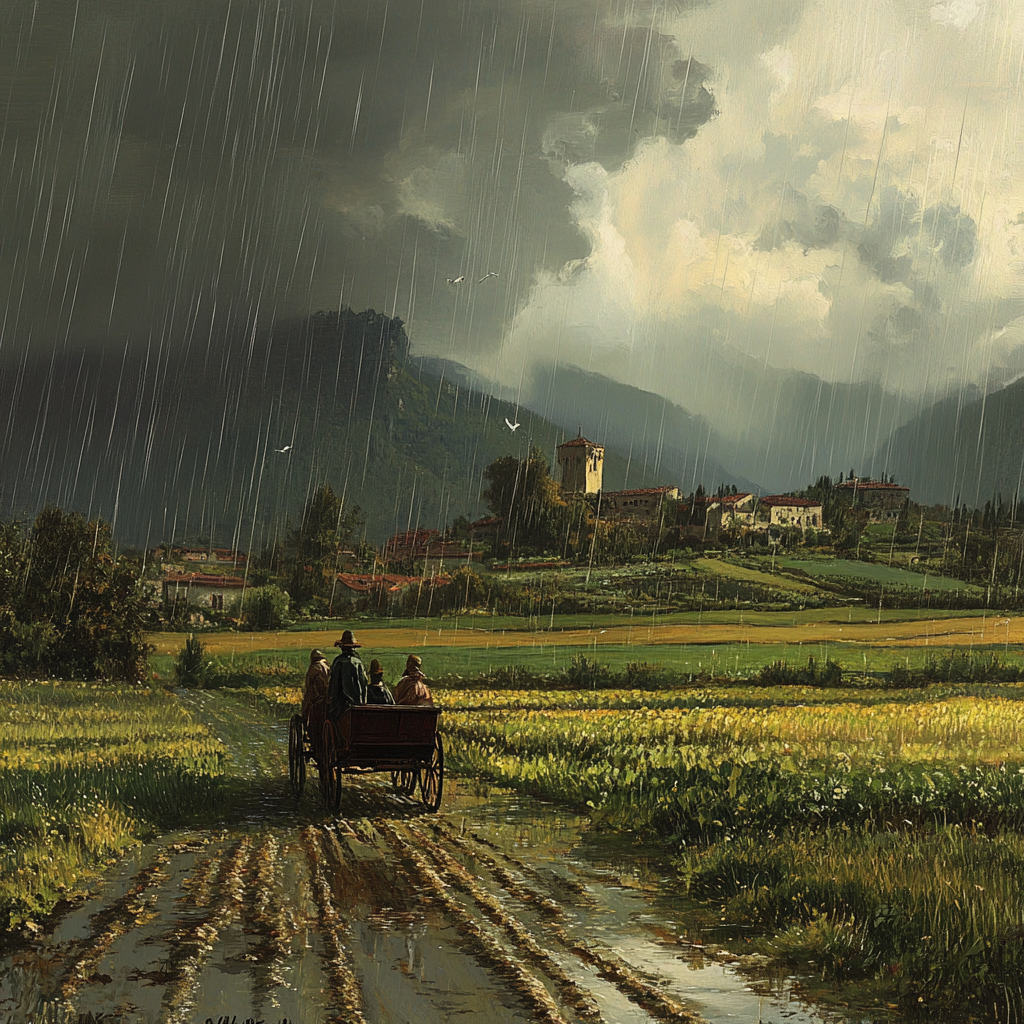
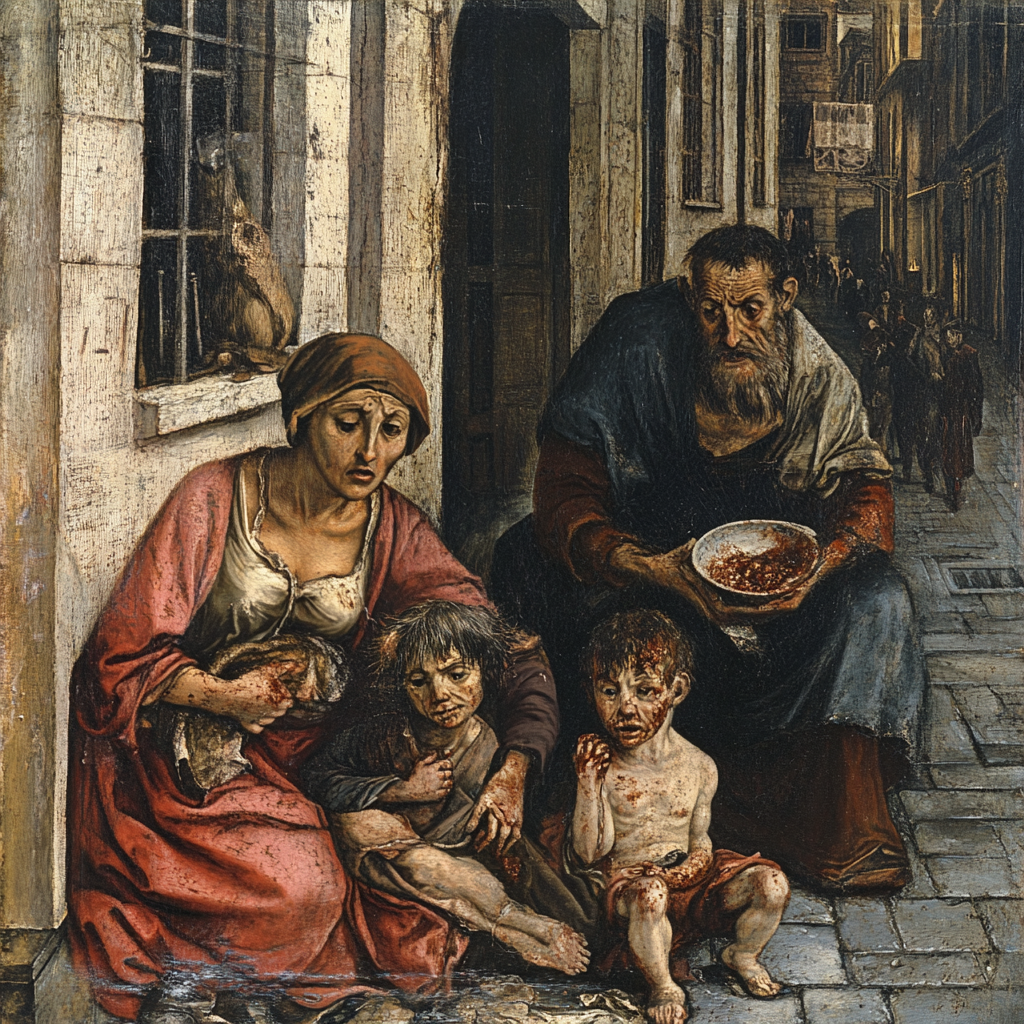
Two years of relentless rain destroy the harvest. Families flee the countryside in search of safety, shelter, and food. Famine grips the city.
The Plague Arrives
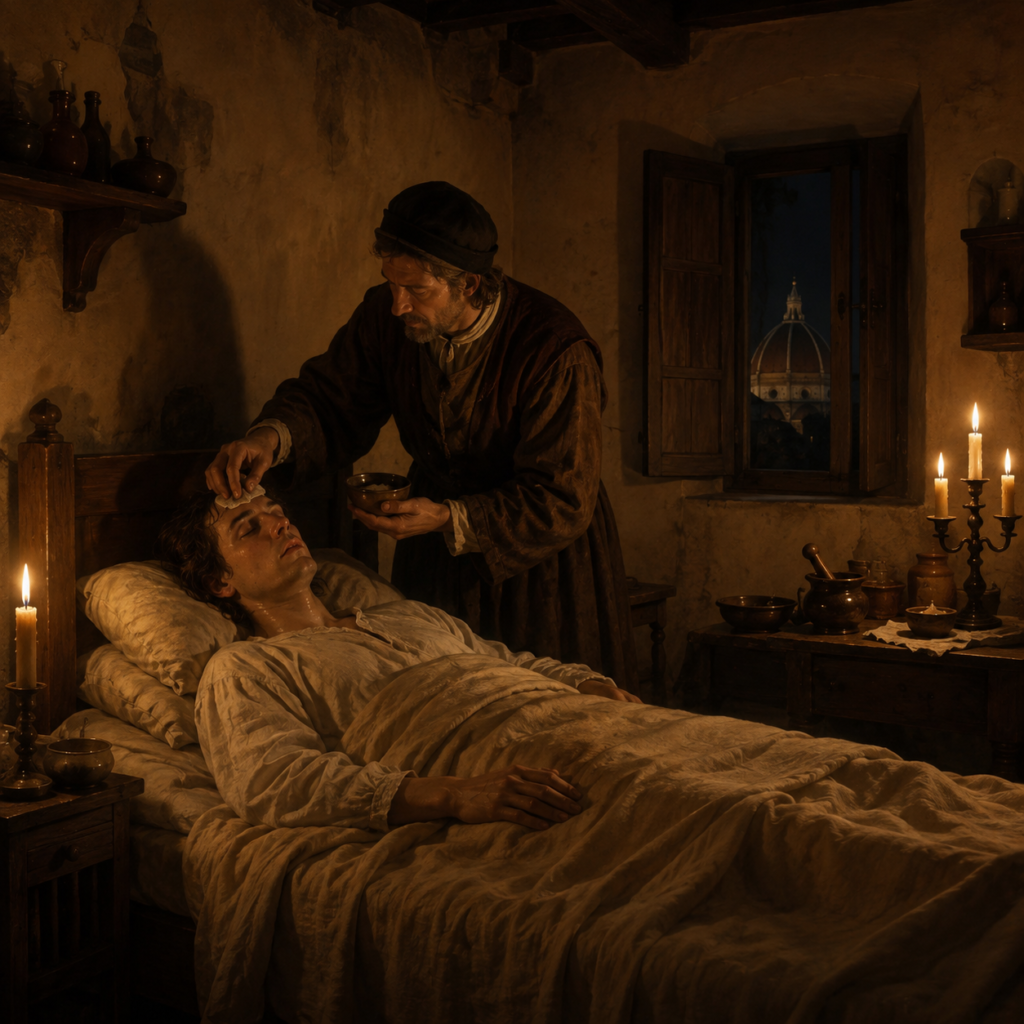
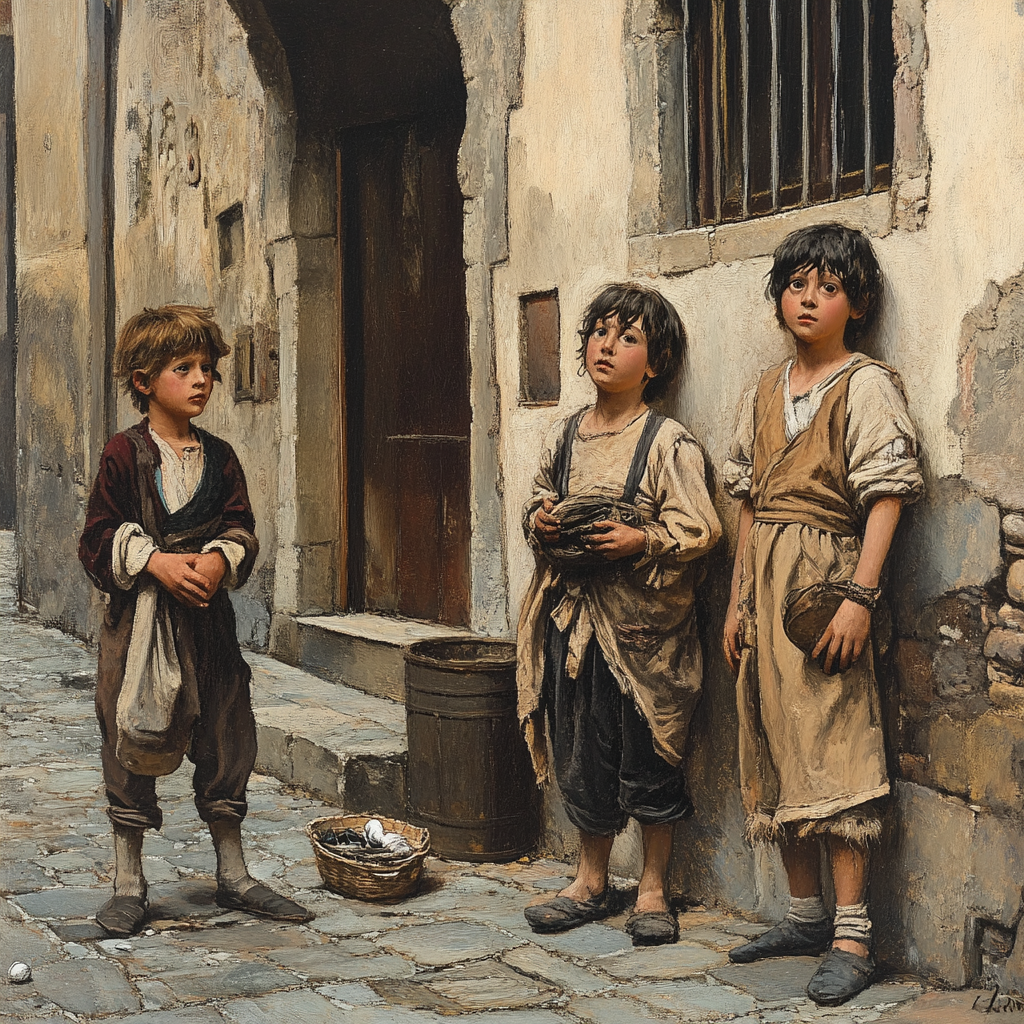
Fear and superstition take hold. Doctors risk infection to treat the sick. Families are ripped apart, leaving behind a trail of sorrow.
Courage and Compassion
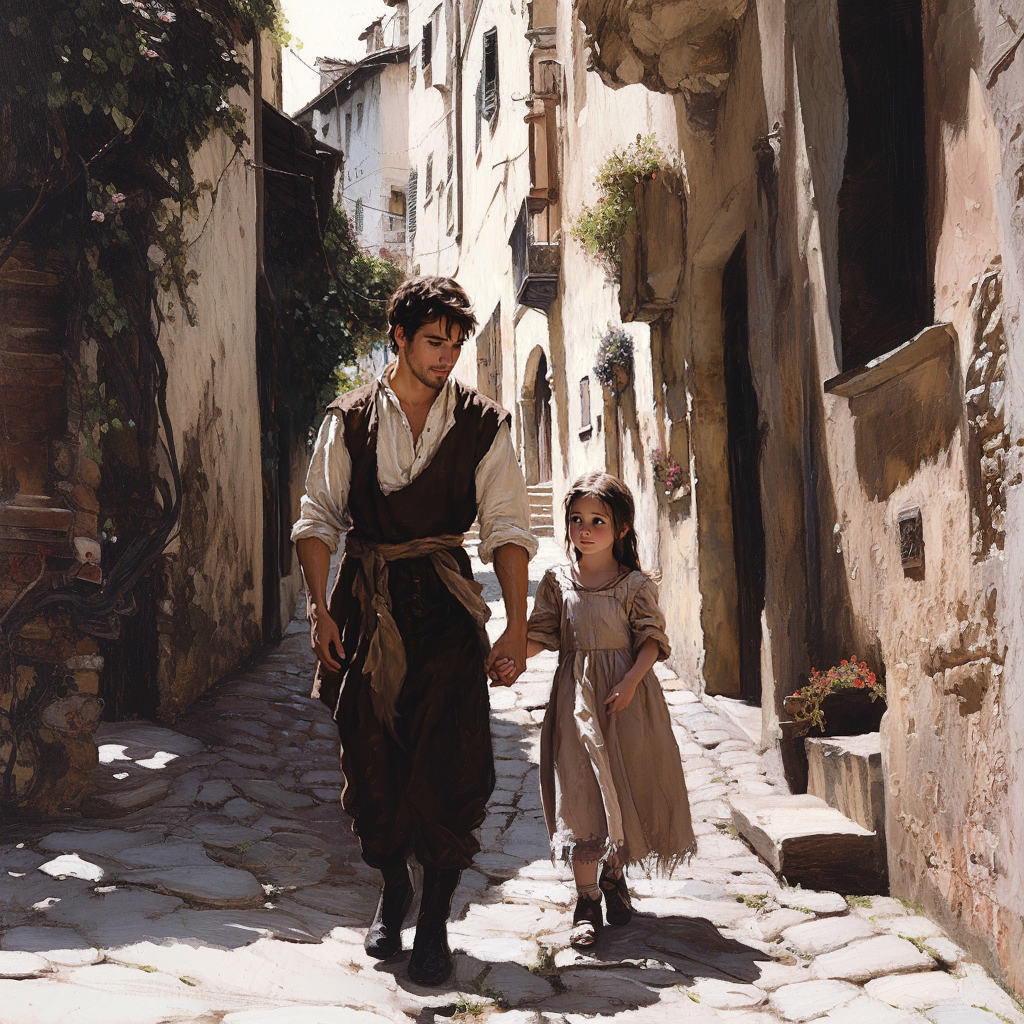
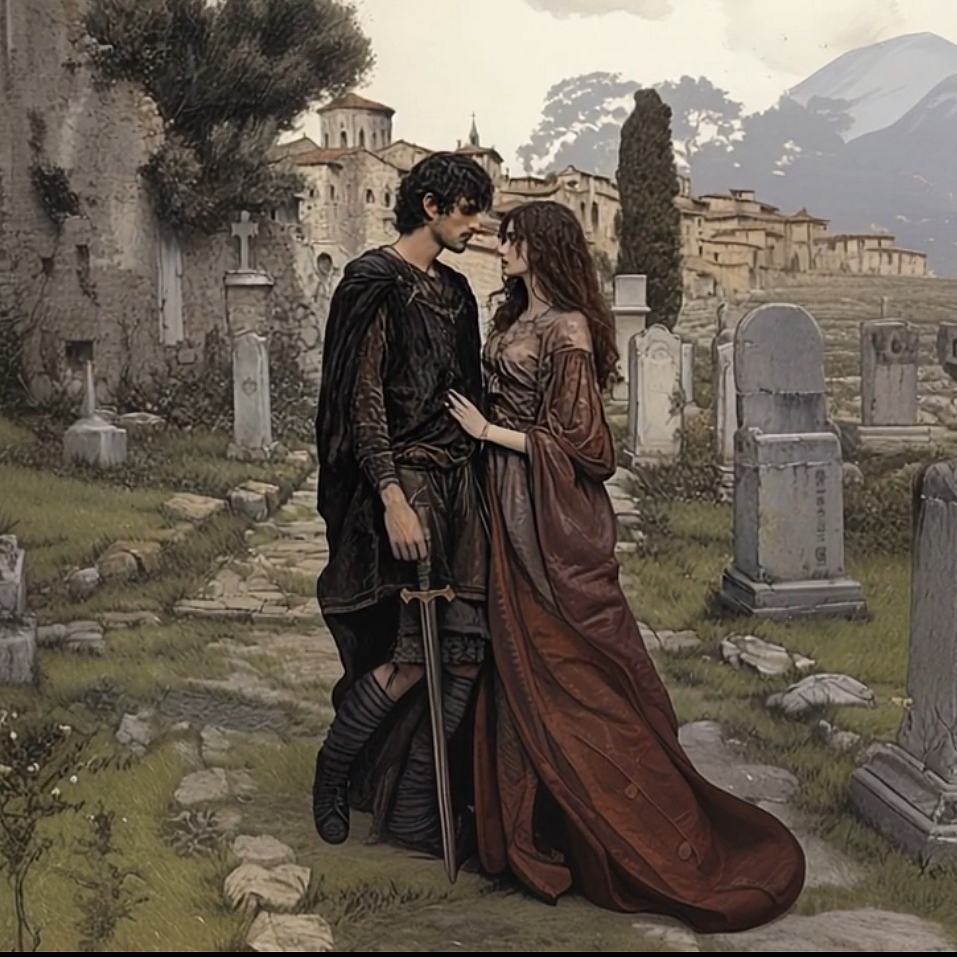
Gino finds a home for an orphaned child. In the midst of dispair, there is hope and compassion. The human spirit triumphs and love blossoms
Praise for The Blackest Time
“The complexities and the helplessness of the plague is captured exquisitely in The Blackest Time.” –The Independent Book Review
Tentarelli’s ability to immerse readers in medieval Florence’s sights, sounds, and struggles makes this a novel worth diving into.” –The Literary Titan
“The historically rigorous description of the apothecary profession, including the guild that regulates it, is impressively presented by the author, whose research is impeccable.” –Kirkus Reviews
“This is truly an uplifting and edifying narrative of the inherent ability of mankind to rise above all the worst trials and tribulations. I enjoyed this story immensely and highly recommend it. ” – Readers Favorite 5 star review
WHY READERS LOVE THIS STORY
If You Loved Year of Wonders
You’ll find the same emotional depth: plague, faith, suffering, community, and resilience.
If You Love Ken Follett’s Historical Worlds
You’ll be transported into a richly detailed medieval city filled with ordinary people facing extraordinary hardship.
If You’re Drawn to Medieval History
You’ll step into Florence at the height of the Black Death — famine, fear, superstition, and survival.
Brief Synopsis
Set in the 1300s during the devastating Black Plague, The Blackest Time depicts the resilience of people struggling against unimaginable hardship.
Gino arrives in Florence seeking opportunity, but instead finds a city in crisis. Two years of incessant rain have destroyed crops, leading to famine and despair. He helps secure shelter for a woman forced to leave her flooded farm and finds work for his sister to ease his family’s struggles.
When the plague hits, Florence is transformed. Some blame others for divine punishment, while others show extraordinary compassion. Gino witnesses doctors risking their lives, neighbors helping one another, and a healer unjustly accused of witchcraft finding refuge in a village that values her skills.
Through it all, Gino discovers love with a young woman he meets at the apothecary — a bond that gives them strength and hope in a world collapsing around them.
Read a sample chapter
Click here to read Chapter 1
Year 1345. Poppi Village, Tuscany.
Gino cracked the skull into pieces, dropped the fragments into a mortar, and began the arduous task of grinding them into a fine white powder. “I’ll make a paste from this,” Gino explained, “for people with rotting teeth, and a broth for people with painful joints.”
“I just snare the animals and bring the bones to you,” the hunter said as he watched Gino work. “You’re the speziale who turns them into medicines.” Gino balked at the praise because, as a mere apprentice, he had much to learn before he deserved the title speziale.
The apothecary sat with a few other shops at the center of Poppi Village, the largest village in the Casentino Valley that supplied the city of Florence with much of its farm produce. The shop had two rooms. Gino worked in the room at the rear, the one that he and Signor Morelli, the owner, referred to as the preparation room. Here Gino and Signor Morelli made ointments, liquids, and powders to treat ailments from the colic of infants to the pains of the elderly. The shop’s front room had a counter where Signor Morelli served his customers and chairs where patrons would sit and share their woes while their medications were being made.
In his first year at the apothecary, Gino had learned how to use dozens of plants that grew in the valley and nearby woodland hills to make medicinal formulations. A jar in front of him contained a potion to promote sleep, which Gino had made earlier from chamomile flowers he’d gathered the previous day. Signor Morelli had taught him to use even the most dangerous plants, such as belladonna and hemlock, both poisons favored by assassins, to make ointments for treating aching joints.
In Florence, members of the Apothecaries Guild who prepared medications were known as speziale. Although there was no guild in Poppi Village, locals honored Signor Morelli with the title speziale in appreciation for his many years of easing their pains and suffering. The Casentino Valley had only one doctor who circulated among its towns and villages. He could be summoned in an emergency to treat serious illnesses and injuries, but for everyday medications, people relied on speziale Morelli and on Gino, his assistant.
Before his apprenticeship, Gino Liani had worked on his family’s farm. As the oldest of six children, he had always been given the most strenuous jobs. He could spend entire days plowing the fields, struggling with the plow to keep it moving straight through rocky soil. He loved the warm sun, the cooling breezes, even the chilling rain. But when out in a field gripping the plow and following behind the ox, intriguing stories he had heard from merchants of colorful events in fascinating places often played through his thoughts.
The goddess Fortuna had brought Gino and Morelli together when labels on the jars of plants and herbs had started to blur in Signor Morelli’s failing eyes. Word of Signor Morelli’s difficulty spread quickly through the village. He had no children to continue his legacy, and the boys in the village were farmers, none of whom had the skills needed to apprentice at the apothecary.
It was Gino’s mother who saw Morelli’s predicament as an opportunity. She had realized her eldest son had talents and curiosity that could not be satisfied on the farm. He needed to move beyond the family and test his abilities. At first, he had resisted her suggestion. “I know nothing of medicines,” he protested. “And there’s much to do on the farm. I’m needed here.”
“No one begins a new job knowing the skills,” she countered. “You’re a smart young man. You’ll learn.”
Gino’s father supported her argument, saying, “Your brothers and sisters are old enough and strong enough to tend the farm. You’ve seen your brother Fanto behind the plow. He doesn’t have your strength yet, but he’s capable and determined. It’s time for you to make your own life.”
As was the custom, other young men in the valley, some even younger than Gino, had left their farms to apprentice with relatives in Florence and Arezzo. By working at the apothecary shop, Gino would have the best of two worlds. He could continue to live at home with his loving family and every morning walk the few miles from the farm to work and learn at the shop in the village. Morelli welcomed his new eager and talented helper. He took Gino foraging in the countryside for medicinal plants and taught him how to prepare the formulations known to all speziali.
Years ago, Gino had gained an appreciation for the value of native plants from his father. As the oldest child, it was always Gino who accompanied his father to gather clover, dandelion, and other grasses to make wine and ale. With that experience, he adapted quickly to the methods practiced in the apothecary shop.
When he first started, Gino’s greatest obstacle had been his inability to read and write. He couldn’t read the labels Signor Morelli had applied to each container. He identified the vessels containing flowering plants by looking at the flowers themselves, but he wasn’t able to distinguish between similar looking dried herbs and grasses. Morelli’s formulations, written on pages and filed in folios, were meaningless to the illiterate apprentice.
Initially, Signor Morelli tried to teach Gino to read letters and words, but his efforts met with little success, since Morelli had no experience as a tutor. Their frustration drove Gino to seek the tutelage of a monk from the Abbey of San Fedele. Nearly all the writings available to the monks were written in Latin. The monk who agreed to help Gino had access to only one book in Italian, Dante Alighieri’s Commedia. Gino made steady progress using Dante’s narrative, but even better progress when he brought pages containing Morelli’s formulas to their study sessions.
Before long, Gino learned to read the labels and decipher the medicinal formulas and Morelli came to trust Gino to create even the most complex compounds. On pleasant afternoons, the aging man took to enjoying long strolls through the town while leaving Gino to serve the shop’s patrons.
Older women didn’t hesitate to describe their conditions to Gino. Some even brought their daughters to the apothecary to meet Morelli’s well-muscled assistant with the lock of hair that fell playfully over one eye. But younger women were reluctant to discuss female problems with a man of only seventeen years. On Gino’s second day by himself, an attractive woman, hardly older than his sister, entered the shop. Gino had never met the woman, but he recognized her immediately as Count Guidi’s new bride. The Guidi family had ruled the villages in the valley for generations. Her elaborate wedding, one week ago, had drawn nobility from as far as Siena to the Guidi castle, an imposing stone structure that towered over Poppi Village. Gino thought it possible that the marriage had accorded the woman a noble title, but unsure how to address her, Gino said simply, “May I help you?”
“May I speak with Signor Morelli?” she asked.
Gino replied, “Signor Morelli isn’t here. I’m his assistant, Gino Liani. May I help you?”
The woman blushed slightly, cast her eyes downward, and said nothing. She turned slightly, as though preparing to leave. Looking at her, Gino could not detect any physical ailments. Her skin was clear, her breathing strong and regular, her eyes, what he had seen of them, were bright. He took a risk by presuming her problem. “You are a new bride. Sometimes, if husbands are rough ….”
She gave a barely perceptible nod, and her cheeks flushed to scarlet. “I’ll be but a moment,” Gino said as he walked to the preparation room where he mixed lavender, salvia, artemisia, and oil to create a salve.
He returned to the counter and handed the woman a paper cone containing the compound. “This should help.”
Without meeting his eyes, she opened her coin purse, withdrew a silver soldo, and held it out. Gino declined the payment, saying, “May you have a long and happy marriage.” She turned quickly and scurried from the shop, leaving behind only the scent of her perfume.
Although they never discussed it openly, Signor Morelli believed one day he would take his leave and Gino would become the village’s speziale. They didn’t expect the time would come so soon and so suddenly.
One morning, Morelli was late to open the shop because he was not feeling well. At midday, he went home to take his noon meal and failed to return. Later that afternoon, a monk from the San Fedele Abbey came to the shop. He moved slowly and purposefully to the counter alongside Gino and crossed himself. “I’ve come here to deliver sad news. The Lord has taken Signor Morelli.”
Gino’s knees weakened. He reached for a nearby chair and slumped down onto it. “How can this be? Signor Morelli said he wasn’t feeling well, but he served customers this morning. He just went home to rest.”
“He collapsed outside his house. Neighbors tried to help him, but they could do nothing. It’s a shock to us all.” The monk continued, “Sometimes the Lord moves quickly. We all loved Signor Morelli.” The monk looked down at Gino with sympathetic eyes. “His death may render a burden onto you and others, but do not grieve for him. He is with God in a better place.”
The monk stayed until Gino sat up straight, glanced around the shop, and said, “The village will miss him.”
As he turned to leave, the monk said, “The village will find a way and you will find a way.”
Gino was still sitting in the chair with his hands folded in his lap when the baker’s wife came into the shop. She often came for a sweet-smelling unguent made from lavender and sage to treat her frequently recurring headaches. Gino pushed aside his despair, went to the preparation room, and took a selection of ingredients from their containers on the shelves. As he and Signor Morelli had done many times before, he took precise amounts of each item and combined them to make the headache remedy.
In little more than a week, the villagers began calling Gino a speziale. Their acceptance made him feel both proud and unworthy. Signor Morelli had been trained in Florence by a member of the Apothecaries’ Guild. He had shared his knowledge freely, but Gino knew he had much more to learn before he deserved the title speziale. He dreaded the day when a villager would come to him with a problem, and he wouldn’t know the remedy. With Morelli gone, there was no one to teach him.
At noon, on a cool rainy day, Gino unpacked the lunch his mother had prepared for him—bread, cheese, and pork sausage. He had just broken off a piece of bread when a stranger entered the shop. He had shoulder length dark hair, wet from the rain, and narrow-set eyes. His cloak was pulled tight as protection against the weather.
Gino set his lunch aside and asked, “How may I help you?”
The man shook water droplets from his cloak and let it fall open, revealing a stylish blue silk tunic with silver buttons. “I am the owner of this building,” he announced, speaking with an accent Gino didn’t recognize. Gino knew several shops in the village were owned by Count Guidi’s many cousins. “My son recently graduated from the law school at the University of Padua,” the man stated. “This valley needs a lawyer, and my son will fill that need. He’ll be coming to Poppi, and this will be his office.”
Stunned, Gino said, “But what will become of the apothecary? The village needs an apothecary. Everyone in the valley comes here for medicinals.”
The man grunted. “There’s an apothecary in Arezzo. It’s less than a day’s ride. People can get what they need in Arezzo.” He scanned the room, stepped around the counter, and peered into the preparation room. He gave a dismissive wave. “Workers will come here in two days to remove this stuff and make these rooms into a respectable office for my son.”
Gino shared his distress with his family at their evening meal. His mother, on the verge of outrage, snapped, “The people in this valley need an apothecary, not a lawyer. When people are sick, they need to be cared for quickly. They can’t ride a half day on horseback to Arezzo. I never heard anyone say we need a lawyer in Poppi.”
His youngest brother asked, “What will you do?”
Gino met the boy’s gaze and said, haltingly, “I don’t know. I’ve been able to help people, but I don’t know enough to open my own apothecary. I guess I’ll come back to the farm.”
His father pounded the table. “No, you won’t. You’ve labored to learn the skills of a speziale, and you mustn’t let those efforts be lost in the wind. You owe it to Signor Morelli to carry on his legacy… if not in Poppi, then somewhere else. Every man must take his own path in life, and you’ve already begun following yours. You must look forward. It will not serve you to look backward.”
They discussed many possibilities, and by the end of the evening, his mother had persuaded Gino that he should look for work in Florence. She said, “Every district of that city must have an apothecary shop. Surely one of them has the need of an apprentice.”
His father agreed and said, “You can expand your skills in Florence; then, after you’re accepted by the guild as a speziale, you can return to Poppi.” Gino had fidgeted in his chair as he absorbed the arguments put forth by his parents. They were right, of course, but he was already anticipating the pain of leaving his home and family.
Gino spent the next day, his last in the apothecary, making formulations. He knew which people in the village regularly had headaches, who suffered from sore joints, and who had intestinal disorders. He prepared quantities of those medications and, with the help of his brother, distributed them throughout the village. Rather than let Guidi’s workmen trash the remaining ingredients, he delivered those to the Abbey of San Fedele to monks who had experience making basic restoratives. He wrapped Signor Morelli’s recipe folio in a cloth and tied it securely. He would take that with him to Florence. One last time, he locked the apothecary door and wondered why he did so. There was nothing of value left inside, only a few simple paintings that Morelli had hung on the walls to bring a modicum of joy to his customers, and tomorrow those would be destroyed by Guidi’s workmen.
In late afternoon, Taddeo, a merchant, made his round of farms in the valley to collect vegetables he would take to the mercato in Florence. Since the Casentino Valley was many hours distant from Florence, Taddeo always loaded his wagon in the evenings, kept it at his home overnight midway between Poppi and Florence, and departed for the city early the following morning. “My son is going to Florence to look for work,” Gino’s father said as he helped load artichokes into Taddeo’s wagon. “Might he be able to travel with you?”
“I thought he was working at the apothecary here in Poppi,” Taddeo began, then in a flash of recognition he said, “Ah … it closed. Someone told me the apothecary had closed. Certainly, Gino can travel with me. I’ll welcome his company. Does he have work in Florence?”
“He’s hoping to find work in an apothecary, where he can add to what he learned from Signor Morelli.”
Gino packed his small satchel and tossed it into the back of Taddeo’s wagon. He hugged every member of his family, not knowing when he might see them again. His mother tried, without success, to hold back tears. His father embraced him tightly and placed a coin purse in Gino’s hand. “You will need this until you can find work.”
Gino accompanied the merchant and spent the night on a mat near the fire in the kitchen of Taddeo’s house. He got little sleep worrying over what his future held.
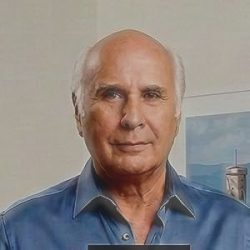
Meet the Author – Ken Tentarelli
My travels through Italy, from the Alps to Sicily’s southern coast, ignited a deep appreciation for the country’s rich history and its people. I launched my writing career with seven award-winning novels set during the Renaissance. Delving further back in time, my research into the devastating Black Plague inspired The Blackest Time.